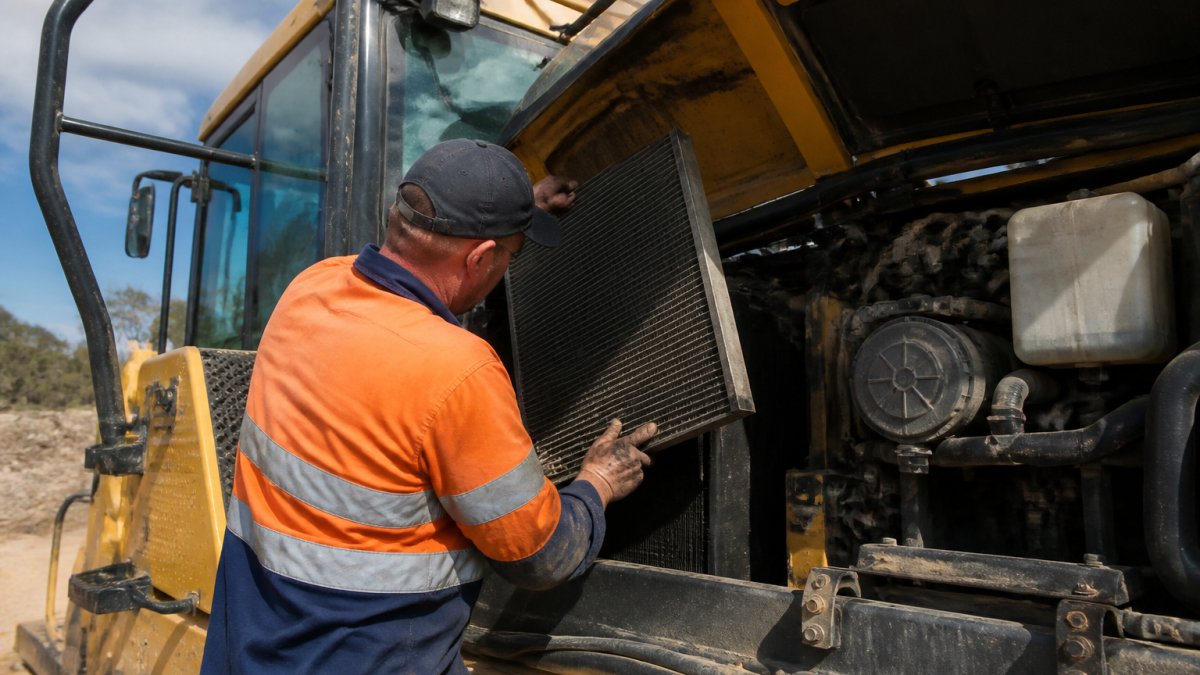
 how-to
Why Heavy Equipment AC Fails: Causes and Fixes
Table of Contents
- Why Heavy Equipment AC Fails: The Big Picture
- Common Signs of AC Failure Operators Should Never Ignore
- Refrigerant Leaks, Oily Residue, and the Environmental Cost
- Restricted Airflow, Clogged Condensers, and Dust Damage
- Signs of AC Compressor Failure in Heavy Machinery
- Electrical Faults and the Importance of Professional Auto Electrical Diagnosis
- Heavy Equipment HVAC Maintenance Schedule: Daily Checks to Annual Service
- DIY vs Professional Repair: What Actually Saves You Money
- Frequently Asked Questions
Last Updated: September 30, 2026
Why Heavy Equipment AC Fails: The Big Picture
Heavy equipment AC fails for one simple reason: these systems were never built to survive the conditions they work in. Dust, vibration, extreme heat, and constant use push every component past its limit.
At Yarrow Group Pty Ltd, we service air conditioning across trucks, tractors, dozers, and harvesters, and the same failure points show up again and again. Understanding why heavy equipment AC fails is the first step to fixing it properly.
Most operators only call for help when the cabin turns into an oven. By then, a small leak has usually become a dead compressor.
Here's what matters most: almost every failure starts small. A slow refrigerant leak, a dusty condenser, a loose wire. Catch these early and you avoid the expensive repair.
This guide breaks down the eight most common causes, the warning signs to watch for, and a maintenance schedule that keeps your fleet cool.
Common Signs of AC Failure Operators Should Never Ignore
The clearest sign of AC trouble is weak airflow that never gets cold, even on full blast. If you notice this, stop running the system and get it checked.
Other warning signs include:
- Warm air from the vents
- Strange noises when the AC kicks in
- Water pooling in the cabin
- A musty smell
- The compressor clutch cycling on and off
A common mistake is ignoring the early signs. Operators often wait until the system dies completely. That turns a simple fix into a full replacement.
Refrigerant Leaks, Oily Residue, and the Environmental Cost
Refrigerant leaks are the number one cause of AC failure in heavy machinery. The system loses its charge slowly, so cooling fades over weeks rather than stopping all at once.
Look for oily residue around hoses, fittings, and the compressor. Refrigerant carries oil with it, so a leak leaves a greasy trail behind. A hissing sound near a line is another giveaway.
Leaks usually come from:
- Worn O-rings and seals
- Abrasion on hoses and lines
- Pinched lines from vibration
- Corroded fittings
The environmental impact matters too. Refrigerants are potent greenhouse gases. Australian regulations require licensed handling and recovery of these substances, which is why ARC-accredited technicians use proper recovery equipment rather than venting to the atmosphere. The Australian Refrigeration Council sets the standards for safe refrigerant handling.
Restricted Airflow, Clogged Condensers, and Dust Damage
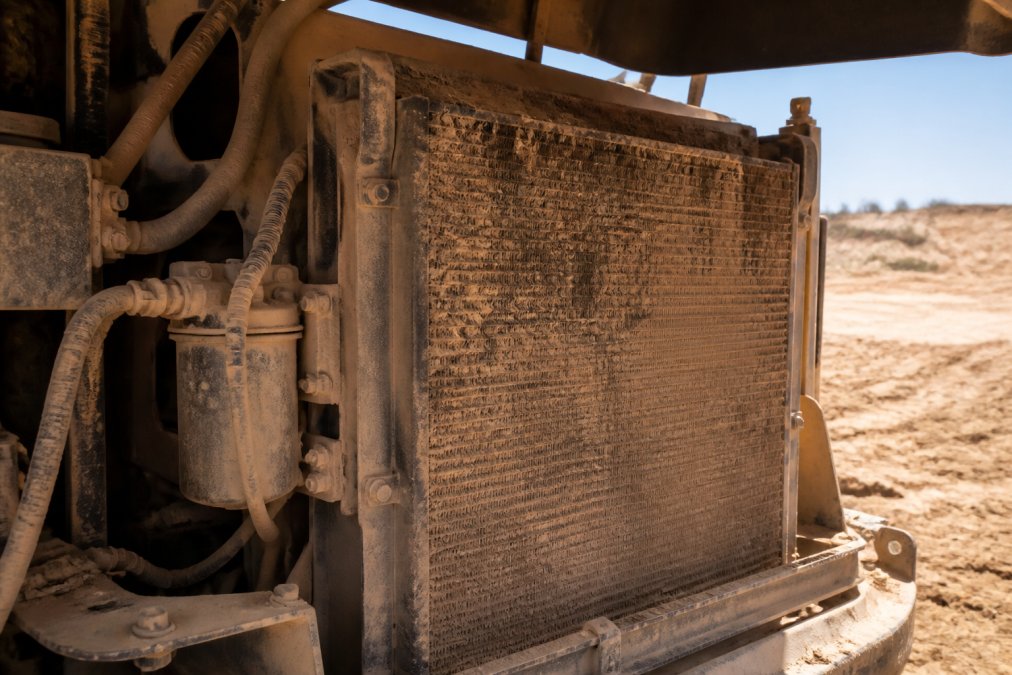
Airflow restriction is the silent killer of heavy equipment AC. When the condenser can't shed heat, system pressure climbs and cooling efficiency collapses.
The condenser sits at the front of the machine, right where dust, mud, and debris collect. In dry, dusty conditions, the fins clog fast. A clogged filter inside the cabin adds to the problem by choking the evaporator.
Dust damage is climate-specific.
Check these parts regularly:
- Condenser fins and coils
- Cabin air filters
- Blower motor and vents
- Evaporator drain lines
Signs of AC Compressor Failure in Heavy Machinery
The signs of AC compressor failure in heavy machinery start with noise and end with silence. A failing compressor often rattles, squeals, or grinds before it stops working completely. But symptoms alone are misleading, a compressor that won't engage is just as likely to be a pressure switch or a wiring fault as a seized unit. The mechanism matters more than the noise.
How a compressor actually fails
Symptoms worth acting on
- Loud metallic rattle, squeal, or grind when the clutch engages
- The clutch won't engage at all, or engages and disengages rapidly (short-cycling)
- Cooling works briefly, then fades as the unit overheats and cuts out
- Black specks or a metallic sheen in the refrigerant lines
- Oil residue around the compressor body or the clutch face
- Belt squeal or visible belt glazing on belt-driven units
Thermal overload and the pressure relationship
Repair or replace: the honest trade-off
- Contamination. If black debris is present, the condenser, expansion valve, and drier must be flushed or replaced alongside the compressor. Skipping this step voids most warranties and kills the new unit within months.
- Age and hours. On a high-hour machine, a seal kit and clutch replacement may buy a season, but a full unit is often the better long-term call.
- Cause. If the failure was caused by a chronic leak or a blocked condenser, fixing only the compressor is throwing money at a symptom.
Electrical Faults and the Importance of Professional Auto Electrical Diagnosis
Electrical faults cause a large share of AC problems, and they're the hardest to trace without proper tools. The importance of professional auto electrical diagnosis comes down to one thing: guesswork costs money. A failing blower motor, a bad pressure switch, or a corroded connector can all mimic a refrigerant problem. Without a proper diagnostic, you might replace a healthy compressor and still have no cold air.
Why electrical faults mimic refrigerant faults
Common electrical culprits
- Blown fuses and relays in the HVAC circuit
- Faulty low-pressure and high-pressure switches
- Corroded wiring, connectors, and earth points, especially on machines that see wash-downs or coastal humidity
- A worn compressor clutch coil or a slipping clutch air gap
- Failed blower motor resistors or a seized blower bearing
- Damaged sensor wiring from vibration or rodent activity in stored machines
A diagnostic sequence that saves money
- Confirm the complaint, is it no cooling, weak airflow, or intermittent operation?
- Check static and running pressures to rule refrigerant in or out.
- Test the clutch circuit: power, earth, switch continuity, and coil resistance.
- Test the blower circuit: fuse, relay, resistor pack, motor draw.
- Scan for fault codes on machines with CAN-bus HVAC control.
- Only then recommend parts.
Operator-level checks before you call a technician
- Does the blower run on every speed setting?
- Does the clutch engage with a visible click when the AC is switched on?
- Do the vents change position when you move the mode selector?
- Are there any blown fuses in the HVAC circuit?
- Any burning smell, chafed wiring, or loose connectors visible in the cabin?
Heavy Equipment HVAC Maintenance Schedule: Daily Checks to Annual Service
A heavy equipment HVAC maintenance schedule prevents most breakdowns before they start. The trick is matching the effort to the interval.
| Interval | Task | Who Does It |
|---|---|---|
| Daily | Check airflow and cooling, inspect for leaks | Operator |
| Weekly | Clean condenser fins, check belt tension | Operator |
| Monthly | Inspect hoses, fittings, and filters | Operator or tech |
| Quarterly | Test system pressure and refrigerant charge | Licensed technician |
| Annually | Full service, leak test, electrical check | Licensed technician |
Operators should run a quick daily check:
- Does the AC blow cold within a minute?
- Any odd noises or smells?
- Any oily residue or moisture?
- Are the vents clear of dust?
DIY vs Professional Repair: What Actually Saves You Money
DIY repairs save money only when the job needs no refrigerant handling or electrical diagnosis. Everything else belongs with a licensed technician.
Here's the honest breakdown:
- Safe to DIY: cleaning condensers, changing cabin filters, checking fuses
- Not safe to DIY: refrigerant top-ups, leak repairs, compressor swaps, wiring faults
- The catch: handling refrigerant without a licence is illegal, and misdiagnosed electrical faults cost more to fix later
Frequently Asked Questions
What is the most common cause of AC failure in heavy equipment?
Refrigerant leaks are the leading cause. Hoses and lines vibrate constantly, leading to abrasion, pinched lines, and loose fittings. Oily residue around a joint is a clear sign. Low refrigerant charge then forces the compressor to work harder, which leads to overheating and eventual failure. In dusty environments, clogged condensers and restricted airflow are close behind.
How does dust and debris impact heavy machinery AC performance?
Dust blocks the condenser and evaporator fins, reducing airflow and cooling efficiency. The system runs longer and hotter, which raises system pressure and strains the compressor. In dry, dusty conditions, condenser fins can clog within days. Clean them weekly with low-pressure air or water. Cabin filters also need regular replacement, or moisture accumulation and poor cabin air quality follow.
Why is professional auto electrical diagnosis recommended for AC repairs?
AC faults often start as electrical problems: a failing blower motor, a faulty pressure switch, or damaged wiring to the compressor clutch. A licensed technician uses diagnostic tools to trace the circuit and confirm the fault before replacing parts. This prevents misdiagnosis and unnecessary replacements. Auto electrical faults are also a common reason AC repairs fail the first time.
How often should heavy equipment AC systems be serviced?
A practical heavy equipment HVAC maintenance schedule includes daily visual checks, weekly condenser cleaning, and a full service every 500 hours or at least twice a year. In extreme heat or dusty conditions, shorten that interval. Regular servicing catches refrigerant leaks, worn hoses, and electrical faults early, which avoids system failure during peak season.
When AC fails in the field, every hour of downtime costs you. Yarrow Group Pty Ltd provides ARC-accredited air conditioning servicing, professional auto electrical diagnosis, and 24/7 field support across Southern and Central Queensland. Our team handles refrigerant work to Australian safety standards, sources quality parts locally, and keeps your fleet moving. Get started with Yarrow Group Pty Ltd and keep your equipment cool, compliant, and running.