 how-to
Preventative Maintenance for Agricultural Tractors
Table of Contents
- Why Preventative Maintenance for Agricultural Tractors Matters
- What You'll Need Before You Start
- Step 1: Daily Walk-Around Inspection
- Step 2: Lubrication, Oil Changes and Fluid Management
- Step 3: Tractor Service Intervals and Seasonal Schedules
- Step 4: Air and Fuel Filter Replacement
- Step 5: ECM Remapping for Tractors and Electronic Diagnostics
- Your Agricultural Machinery Maintenance Checklist
- Frequently Asked Questions
Last Updated: September 27, 2026
Why Preventative Maintenance for Agricultural Tractors Matters
A tractor that stops mid-harvest costs you the harvest window, not just the repair bill. Preventative maintenance for agricultural tractors is the work you do before something breaks, the cheapest insurance a farming operation can buy.
At Yarrow Group Pty Ltd, we see the same pattern across the Lockyer Valley and Darling Downs. Machines that get regular checks keep running through peak season. Machines that don't end up parked when you need them most.
The goal is simple: catch wear and tear early, before it becomes a breakdown. A daily walk-around takes ten minutes. A mid-season failure can cost you days.
This guide walks through five maintenance steps, from daily checks to electronic diagnostics. Follow them and your equipment will last longer and work harder.
What You'll Need Before You Start
Gather your tools and records before you touch the machine, preparation stops you skipping steps when you're busy.
- The operator manual for each tractor model
- A maintenance logbook, paper or digital
- Engine oil, hydraulic fluid and coolant
- Grease gun and a full grease cartridge
- Tire pressure gauge
- Clean rags and a torch
- Basic hand tools and a filter wrench
- Replacement air and fuel filters
A common mistake is starting a service without the right filters on hand.
Step 1: Daily Walk-Around Inspection
Start every working day with a walk-around inspection. It takes minutes and catches most problems before they grow.

Checking Coolant Levels, Battery Terminals and Tire Pressure
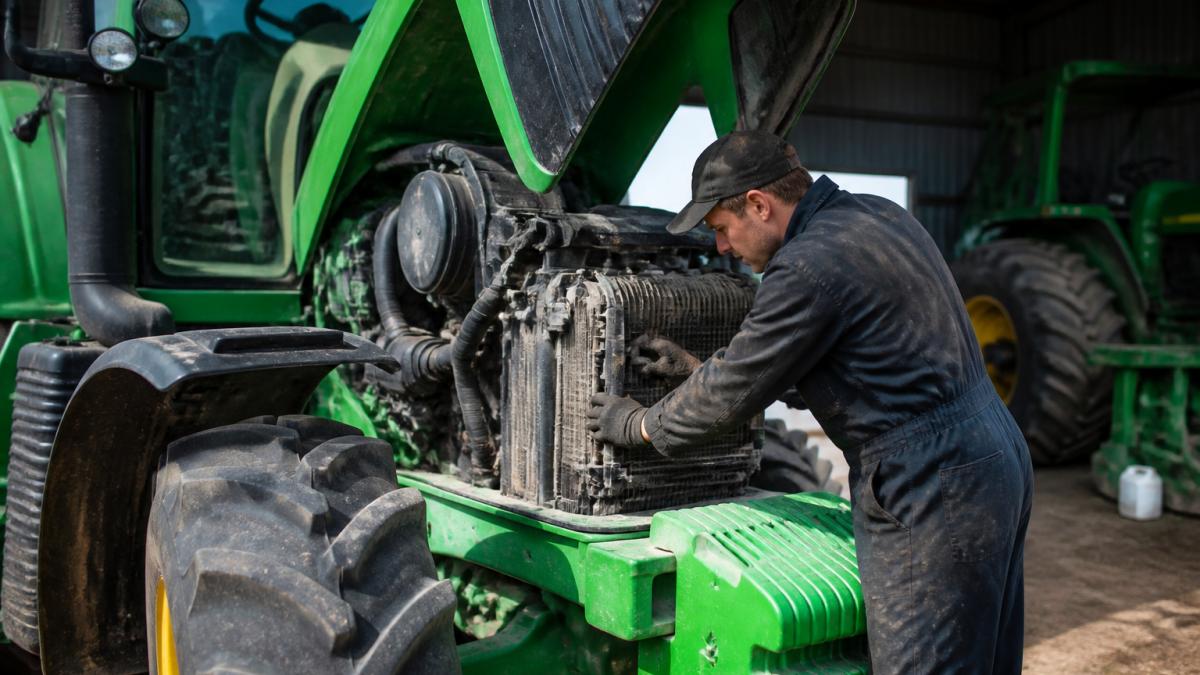
Open the bonnet and check the coolant level when the engine is cold, topping it up if it sits below the mark. Low coolant leads to overheating, which can crack a head.
Step 2: Lubrication, Oil Changes and Fluid Management
Lubrication is where tractor longevity is won or lost. Grease every nipple on the schedule in your operator manual. Skipping one point can seize a joint and stop a machine.
Hydraulic System Checks and Fluid Analysis
The hydraulic system powers your loader, three-point linkage and steering. Check the fluid level and look for cloudy or dark fluid, which signals contamination.
Step 3: Tractor Service Intervals and Seasonal Schedules
Tractor service intervals are the set points, measured in engine hours or months, when you service each part. Following them stops small wear from becoming a breakdown, but the real gains come from tying those intervals to the seasons that stress your machine and logging the hours digitally so nothing slips.
- Daily: walk-around, fluid levels, tire pressure
- Weekly: greasing, belt tension check
- Every 250 hours: engine oil and filter change
- Every 500 hours: hydraulic and transmission fluid checks
- Seasonally: full inspection before planting and harvest
Pre-Season and Pre-Harvest Checklists
Most guides give you one generic list. In practice, the checks that matter change with the season and the job.
Pre-planting (late winter / early spring):
- Full fluid change: engine oil, hydraulic, transmission, coolant
- Replace air, fuel and hydraulic filters regardless of hours if they have sat through a wet period
- Inspect and repack wheel bearings and front axle pivots
- Test the battery under load, cold starts punish a weak cell
- Check all lights, beacons and mirrors before long road runs between paddocks
- Grease every nipple, including the ones hidden under the platform
- Verify tire pressures against the manual for the load you will carry
Pre-harvest (late spring / early summer):
- Clean the radiator and cooling pack, chaff and dust are the leading cause of mid-harvest overheating
- Inspect and tension belts on the cooling fan, alternator and air conditioning compressor
- Check hydraulic hoses and couplings under full working pressure, not just at idle
- Test the PTO clutch and check for slip under load
- Confirm air conditioning is charged and the cabin filter is clean, heat stress slows operators and causes mistakes
- Re-torque wheel nuts to the manual's specification
Post-season (after harvest):
- Wash the machine down to remove crop residue and dust, which hold moisture and cause corrosion
- Change engine oil before storage, contaminants left sitting cause more damage than hours of use
- Top up fuel to reduce condensation in the tank, or drain and treat it
- Disconnect and trickle-charge the battery
- Store under cover or with a breathable cover, not a plastic tarp that traps moisture
Using Digital Logs and Telematics to Stay on Schedule
Paper logbooks get lost, smudged or skipped when you are flat out. Modern fleets increasingly use telematics and computerised maintenance management systems (CMMS) to track engine hours, fault codes and service intervals automatically: a telematics unit reports hours to a dashboard and flags when a service is due, often before the operator notices a problem.
Safe Work Australia guidance on plant and equipment maintenance
Step 4: Air and Fuel Filter Replacement
Air and fuel filters protect the engine, and clogged filters rob power. Replace the air filter when it's dirty or damaged, and never run the engine with the housing open.
Step 5: ECM Remapping for Tractors and Electronic Diagnostics
Modern tractors run on electronic control units, or ECUs. The engine control module (ECM) manages fuel delivery, timing and torque limits, while separate controllers handle transmission, hydraulics and after-treatment. When something drifts out of spec, the system stores a fault code, reading it is the fastest way to a correct repair.
Reading and Interpreting Fault Codes
A diagnostic scan tool plugs into the machine's diagnostic port and pulls stored and active codes from each controller. Codes are alphanumeric and grouped by system, engine, transmission, hydraulics, electrical, after-treatment, and numbering varies by manufacturer, so always cross-reference against the service manual rather than guessing.
Basic steps when a warning light appears:
- Note the code and the conditions when it appeared (load, temperature, engine hours)
- Check the obvious: loose connectors, chafed wiring, blown fuses, low fluid
- Clear the code only after the underlying fault is addressed, clearing without fixing hides the problem
- Re-scan after a test run to confirm the fix held
What ECM Remapping Actually Changes
ECM remapping for tractors adjusts the engine's electronic calibration, the fuel and timing maps the ECM uses to decide how much fuel to inject and when. A remap can improve low-speed torque delivery, sharpen throttle response and, in some applications, cut fuel consumption per hectare.
It is not a free lunch. Trade-offs to weigh:
- Higher torque output increases load on the driveline, clutch and transmission, components must be in good condition before a remap
- Emissions compliance must be maintained; tampering with emissions controls is illegal and can void registration or attract penalties
- Manufacturer warranty may be affected, so check the terms before remapping a machine still under warranty
- A remap does not fix a mechanical fault, if the engine is worn or a sensor is failing, remapping will not solve it
Software Updates and Electronic System Maintenance
Electronic diagnostics turn a vague fault into a specific fix. Instead of replacing parts one by one, you read the code and repair what's actually wrong. Remapping is a performance tool, not a repair, fix the fault first, then tune.
For ECM remapping and electronic diagnostics, Yarrow Group Pty Ltd offers professional remapping and auto electrical services across Southern and Central Queensland. Our team works on agricultural machinery and earthmoving equipment, with 24/7 field support when a breakdown hits.
Your Agricultural Machinery Maintenance Checklist
An agricultural machinery maintenance checklist keeps every service on track. Use it daily, weekly and seasonally, and record each task in your log.
| Task | Frequency | Why It Matters |
|---|---|---|
| Walk-around inspection | Daily | Spots leaks and damage early |
| Coolant, battery, tire check | Daily | Prevents overheating and breakdowns |
| Greasing all points | Weekly | Stops joints seizing |
| Engine oil and filter change | Every 250 hours | Protects moving parts |
| Hydraulic fluid and analysis | Every 500 hours | Catches pump wear early |
| Air and fuel filter replacement | As needed, seasonally | Keeps power and efficiency |
| Electronic diagnostics and remapping | Seasonally | Improves performance and fuel use |
Frequently Asked Questions
What is the recommended maintenance schedule for an agricultural tractor?
Tractor service intervals typically follow engine hours: daily checks before each use, a 50-hour initial service, then routine servicing every 250 to 500 hours depending on the manufacturer and operating conditions. Seasonal inspections before planting and harvest are also critical. Always follow the operator manual for your specific model, as intervals vary between makes and engine types.
What daily checks should be performed on agricultural tractors?
A daily walk-around inspection should cover coolant levels, engine oil, hydraulic fluid, tire pressure and wear, battery terminals, belt tension, and any visible leaks or damage. Check the air filter indicator and inspect around the machine for loose fittings or debris buildup. Catching small issues during a walk-around prevents breakdowns during the harvest window when downtime is most costly.
How does ECM remapping for tractors improve fuel efficiency?
ECM remapping adjusts the engine control module's fuel and timing maps to suit your tractor's actual workload, which can improve torque, throttle response and fuel efficiency. It is most effective when the engine is otherwise in good condition, so schedule remapping alongside routine servicing rather than as a substitute for it. A qualified technician can assess whether remapping suits your machinery and operating conditions.
How do I dispose of used oil and fluids responsibly?
Used engine oil, hydraulic fluid and coolant must never be poured onto land or into drains. Store them in sealed containers and take them to a licensed recycling facility or your local council's designated drop-off point. Many fluid suppliers also accept used oil for recycling. Proper disposal protects soil and groundwater, and keeps your operation compliant with environmental obligations.